What Does Dyslexia Actually Look Like? Beyond the Myths
What Does Dyslexia Actually Look Like? Beyond the Myths
By Stacey Masliansky
In Part 1 of this series, I shared what I used to believe about dyslexia and, more importantly, what I didn’t know.
For a long time, I thought dyslexia was something you could easily recognize. I pictured a student who reversed letters, struggled to sound out simple words, or had obvious difficulty reading. I know now that I was looking for the wrong things.
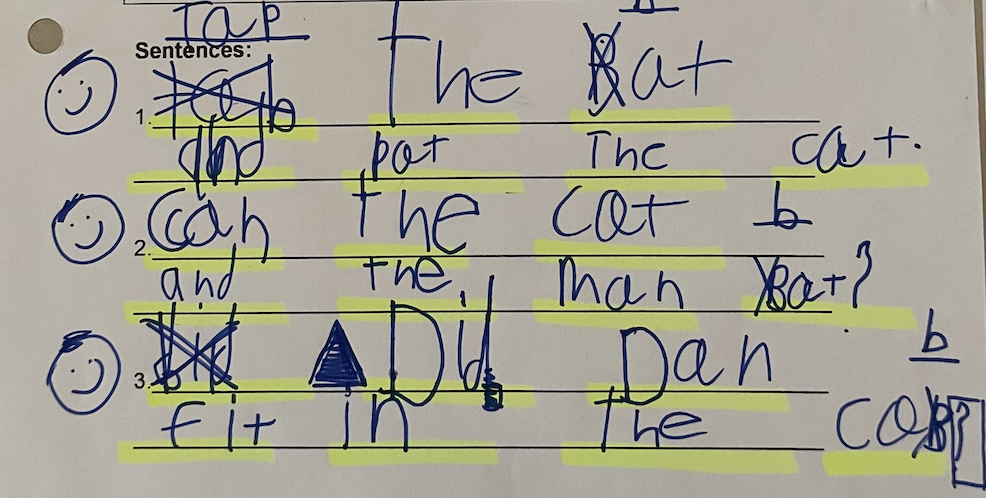
One of the most important things I have learned over the years is that dyslexia does not always look the way we expect it to look. A student can be bright, articulate, curious, creative, and incredibly knowledgeable and still have significant difficulty reading and spelling words. A student can understand a complex discussion about a novel but struggle to read a paragraph independently. And sometimes, a student can become so good at compensating that the difficulty isn’t obvious at all.
Dyslexia Is About Words
The current definition of dyslexia from the International Dyslexia Association describes dyslexia as a specific learning disability characterized by difficulties in word reading and/or spelling that involve accuracy, speed, or both.
That phrase, word reading and/or spelling, has become incredibly important to me. It reminds us to look closely at what happens at the word level, rather than making assumptions based on how a student performs with an entire text.
When we talk about word reading, we need to consider more than whether a student can get through a passage. How accurately and efficiently do they read words? How easily do they recognize familiar words? What happens when they encounter a word they have never seen before?
Spelling matters, too. Reading and spelling are closely connected, and sometimes a student’s spelling gives us a window into their word-level knowledge that isn’t as easy to see when they are reading familiar text.
I learned this firsthand several years ago. A mother reached out to me with concerns about her daughter’s spelling. She was a high school English teacher herself and was very clear about one thing: her daughter did not have reading difficulties.
Her daughter was a rising sixth grader. She was bright and capable, and she could read well. But when it came time to put her thoughts on paper, she became extremely anxious about spelling. She was so afraid of making mistakes that she struggled to get words onto the page.
At first, that might not sound like a reading problem. But when I assessed her, I began to see a different picture. Her real-word recognition was strong, including words at and beyond her grade level. If I had stopped there, I might have concluded that her word-reading skills were fine. Then I asked her to decode nonsense words, words she had never seen before but that followed patterns similar to real words. That is where the picture changed. She struggled.
She had developed a substantial bank of familiar words that she could recognize quickly and accurately. But when she encountered an unfamiliar word, she had much more difficulty applying what she knew about sounds, letters, and word structure to figure it out.
Suddenly, her spelling difficulties made more sense. Her challenge wasn’t that she didn’t know enough words. She didn’t yet have a flexible, reliable system for analyzing and producing words she couldn’t simply recognize from memory.
That experience changed the way I think about the phrase “But she can read.” Yes, she could read. But looking more closely at how she was reading, and what happened when she had to decode unfamiliar words or spell, gave us information that familiar word recognition alone could not. That is why I now pay much closer attention to spelling.
It Isn’t Always About Accuracy
Another important shift in my thinking was understanding that dyslexia does not look exactly the same in every student.
Some students have obvious difficulty reading words accurately. Others can eventually read words accurately, but their reading remains slow and effortful. Some struggle with both accuracy and speed.
This distinction matters because it is easy to look at a student who eventually reads almost every word correctly and thinks, But they can read.
Technically, they can. But if every word requires conscious effort, reading is not yet automatic. A student may expend so much energy getting through the words that there is less available for understanding, connecting ideas, making inferences, and building knowledge.
This is one reason I have learned to listen differently when students read aloud. I listen for more than whether the student eventually reads the word correctly. I listen to how the student got there.
Do they recognize familiar words immediately? Do they stop frequently? Do they sound out the same word every time? Do they guess based on the first letter? Do they substitute a word that makes sense in the sentence but doesn’t actually match the letters on the page?
These details tell us much more than simply asking whether a student “can read.”
When Strengths Can Hide Struggles
A student’s strengths can sometimes make reading difficulties harder to recognize.
A student may have strong vocabulary, excellent oral language, a good memory, or extensive background knowledge. They may participate in sophisticated discussions and demonstrate a deep understanding of what they hear. These strengths are wonderful, but they can also mask what is happening at the word level.
I think this is one reason I was so surprised by the sixth grader I described earlier. If I had simply watched her read familiar text, I might have concluded that she was a strong reader. It was when I changed the task, asking her to decode words she had never seen before and looking closely at her spelling, that I began to see what was underneath that strength.
A student can understand everything that is read aloud and still struggle to read the same text independently. A student can be a strong thinker and communicator and still find reading and spelling extraordinarily difficult.
That is why I have become much more cautious about making assumptions based on a student’s overall academic performance. Instead of thinking, But she’s so bright, or He understands everything when I read it to him, I have learned to ask a different question:
What happens when this student has to work with the words independently?
That question can tell us a lot.
When We Misread the Student
This brings me back to something I wrote about in Part 1.
During my years as a high school English teacher, I sometimes interpreted students’ avoidance of reading as disengagement. If a student didn’t want to read aloud, didn’t finish an assigned chapter, or regularly avoided independent reading, I might have assumed they simply weren’t trying. Now I wonder how often those behaviors were telling me something else. What if the student wasn’t avoiding the work because they didn’t care, but because reading had become difficult, frustrating, or even embarrassing? Now I wonder how often the better question would have been, What are they trying to avoid?
If reading is consistently difficult, avoiding it can make perfect sense. If every page requires enormous effort, if spelling feels like guessing, and if reading aloud in front of classmates is uncomfortable or embarrassing, a student may develop strategies to protect themselves.
Those strategies can look like laziness, defiance, or disinterest. But sometimes what we are seeing is a student who has learned that avoiding the task is easier than repeatedly experiencing failure. I wish I had understood that sooner.
I can’t go back and teach those students again. But I can look at students differently now. I can ask different questions. And I can help other teachers recognize what I wish I had recognized earlier in my own career.
Seeing the Student More Clearly
I don’t think the goal is to become a teacher who sees dyslexia everywhere. The goal is to become a teacher who knows when to look more closely.
Dyslexia doesn’t always announce itself. Sometimes it looks like a student who reads slowly. Sometimes it looks like a student who struggles with spelling. Sometimes it looks like a student who knows the answer but struggles to get through the text. And sometimes it looks like a student who has become very good at compensating.
Learning to recognize these differences has changed the way I see struggling readers. It has taught me to look beyond whether a student can eventually get the right answer and pay attention to how they are getting there.
Most importantly, it has taught me to pause before I label a student as reluctant, disengaged, or unmotivated. There may be something happening beneath the surface that I haven’t yet understood.
Once we begin to see those difficulties more clearly, we have to ask another important question: What happens when we are providing good instruction, and a student is still struggling?
That is where we need to talk about persistence and why “wait to fail” should never be the plan.
Coming next: Part 3, “But They’re Getting Good Instruction…”