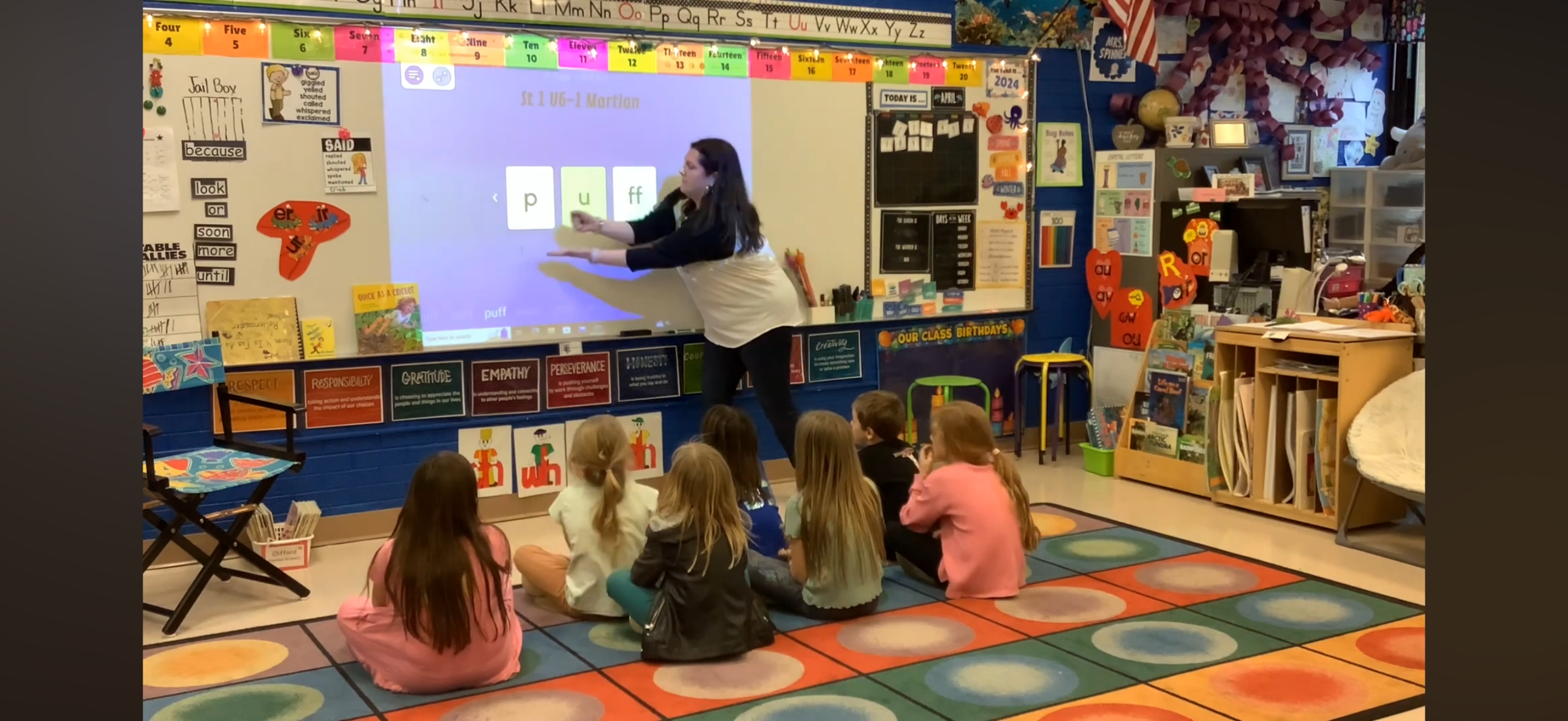
I Thought I Knew My Students as Readers. Then I Started Teaching Structured Literacy.
I Thought I Knew My Students as Readers. Then I Started Teaching with Structured Literacy.
By Karla O’Brien
I remember walking into my very first classroom as a brand-new teacher 27 years ago. The school was barely finished being built, and the only instructional materials waiting for me were boxes of a brand-new reading curriculum.
It was a popular program, built solely on helping students memorize words by sight. At the time, learning to “read” words as whole words was the way. I followed the scripted lessons, delivered the instruction, and celebrated when students could read the words I had taught them.
I thought I was teaching children to read.
Looking back, I realize I was teaching them to memorize enough words that it appeared they were reading. I didn’t understand the difference. I thought that was how reading was taught. That is how many teachers were taught to teach reading.
Oh, how wrong I was. Unfortunately, many years went by and so many children had come through my classroom. I had worked hard, attended professional development, earned a special education degree and a master’s degree, and spent years trying to help struggling readers. I cared deeply about my students and wanted them to succeed, yet I had not been given the knowledge I needed to truly understand how children learn to read.
That is difficult to admit. Sometimes I wonder what happened to the children I taught in those early years. I sincerely hope they received the instruction they needed and deserved.
I cannot change what I didn’t know then, but I can be honest about it, learn from it, and help other teachers develop the knowledge I wish I had possessed much earlier in my career.

I Had Materials. I Had Training. But I Was Missing Something Very Important.
Throughout my career, my district invested heavily in reading instruction. We received extensive professional development, purchased boxed curricula, and learned how to deliver the programs as they were designed.
The district likely spent hundreds of thousands of dollars on materials and training. Teachers were shown how to implement the lessons, follow the scope and sequence, and use the resources provided.
But what was missing for me was a deep understanding of why I was doing what I was doing.
I learned how to deliver a scripted lesson. In fact, I became so comfortable with the scripts that I could leave a sticky note in the curriculum book for a substitute teacher, tell them where to start, and pick up right where they left off when I returned.
Think about that for a moment. Someone who didn’t know my students, their individual strengths, their skill gaps, or their instructional needs could read the script and deliver the same lesson I would have delivered.
I could recognize when a child was struggling. What I couldn’t consistently do was determine precisely why, identify the underlying skill gap, and develop a plan to address it.
I had tools, strategies, assessments, and boxes of curriculum. What I lacked was the knowledge to connect them in ways that made instruction truly responsive to individual learners. That is not the same as teaching.

The Difference Was Understanding My Students
My experience with structured literacy changed everything about me as a teacher.
I was so fortunate to have been presented the opportunity to train with Marsha Geller, the creator of Slant System. It is because of her that I began learning how reading and spelling develop, how to recognize patterns in student errors, and how to identify the specific skills a student had or had not mastered.
Instead of simply marking an answer right or wrong, I began recognizing what the student’s response revealed about their understanding.
Could the student connect sounds to letters? Could they apply spelling patterns to unfamiliar words? Were they able to read a word but not spell it? Could they demonstrate a skill during instruction, but not apply it independently?
I learned that two students could make the same error for different reasons and need different instructional responses. I also learned that a student could appear successful on familiar material while still having significant gaps in foundational knowledge.
The Slant System gave me a framework for connecting assessment, explicit instruction, and ongoing diagnostic decision-making. I could use what I learned about my students to plan instruction, monitor progress, and determine what needed to happen next.
And then there was my supervised practicum. I was assigned my amazing coach, Carol Irgang, who is still coaching teachers with us today. With her expertise to guide me, I learned to apply what I had learned, how to analyze student performance, and she provided me feedback that helped me turn knowledge into practice. I wasn’t simply learning what structured literacy was. I was developing the skill to teach it like an expert, and in a way my students would make the most progress.
I remember telling my practicum coach something I will never forget:
“I feel like a real teacher for the first time!”
I finally felt like I understood my students from top to bottom, inside and out. I could see their strengths, identify their needs, and make instructional decisions with a level of confidence I had never experienced while following a script.
That confidence didn’t come from having every answer. It came from knowing how to find the answers, use the evidence in front of me, and make informed decisions about what to teach next.
For the first time, I felt equipped to respond to my students rather than simply deliver lessons to them. It was from that point on, my students’ literacy skills, in both reading and writing, grew faster and more efficiently than I had ever experienced in my entire career.

I Could Finally Explain What My Students Needed
This new understanding also changed how I approached assessment and IEP meetings.
Previously, I could describe what I observed. I could explain that a student struggled with reading, had difficulty spelling, or needed significant support. Those observations were important, but they didn’t always tell me exactly which skills were missing or how to address them.
I needed to learn how to collect and interpret meaningful data.
Observations can alert us to a problem, but we need specific evidence to understand the nature of a student’s difficulty. Opinions are not data, even when they come from years of experience and genuine concern.
Structured literacy helped me look more closely at what students could do independently, where their knowledge broke down, which errors occurred consistently, and what their performance suggested about next steps.
I could walk into an IEP meeting with a clearer picture of a student’s reading and spelling abilities. I could explain specific skill gaps, support my concerns with assessment findings, and make more informed recommendations about instruction.
I also had a better way to recognize when a student wasn’t progressing as expected. Rather than continuing with the same lessons and hoping for improvement, I could examine the evidence and consider what needed to change.
I had moved from describing a student’s struggles to understanding them well enough to make purposeful instructional decisions.
That is the kind of knowledge I had been missing for much of my career.
What I Wish I Had Known Earlier
It is hard to look back at nearly seventeen years of teaching before I began to understand what I was missing. I think about the children who needed more than I knew how to give them.
I wish I had understood the reading brain earlier. I wish I had known how to recognize the specific skills students needed to develop, how to interpret their errors, and how to design instruction based on their individual needs, not just read a script. I wish I had received the kind of training and supervised practice that eventually transformed my teaching.
But, like so many well-intentioned teachers, I also know that I was doing what I had been taught to do. I attended the professional development. I used the materials. I followed the lessons. I worked hard to help my students.
I cared deeply, and I was trying really hard. The problem was that I didn’t yet have the knowledge and practical skills to teach reading as effectively as my students needed.
Acknowledging that is really uncomfortable, especially in my role now, but I believe it is necessary. We cannot improve what we are unwilling to examine, and we cannot expect teachers to apply knowledge they have never been given the opportunity to develop.
This is why I feel so passionately about providing teachers the right literacy training today.
When I train teachers, I want them to leave with more than a curriculum, a collection of strategies, or instructions for delivering a lesson. I want them to understand the why behind their teaching. I want them to recognize what student responses reveal, identify skill gaps, use assessment data, and make informed decisions about what to teach next.
I want them to experience the confidence that comes from truly understanding the learners in front of them, and to use their talents to do it.
I know my passion is deep. Part of that comes from knowing what I didn’t know for so many years. I sometimes feel that I have a lot to make up for, and that feeling is what fuels my commitment to helping other educators develop the knowledge and skills their students deserve.
I cannot go back and change the instruction I provided early in my career. But I can use what I have learned to help teachers avoid some of the same gaps in preparation. I can advocate for professional learning that goes beyond teaching educators how to deliver materials and instead develops their expertise in understanding and teaching children.
A curriculum can give a teacher the lessons. Professional knowledge helps a teacher understand the learner.
For me, structured literacy changed everything. My training and supervised practicum helped me become the kind of teacher I had always wanted to be. Today, I can honestly say that because of my Slant System training, there are students who may look back on their school years and remember me as the teacher who truly taught them how to read. And knowing that, knowing I was finally equipped to give them that gift, is something I will always carry with me.
That is why this work is so personal to me. I know what it feels like to care deeply about students but not have all the knowledge and skills needed to help them. I also know what it feels like when that changes, when you begin to understand your students in a completely different way and finally have the confidence to make informed decisions about their instruction.
I am incredibly proud that, over the past five years, we have trained thousands of teachers in the Slant System approach to structured literacy. And almost daily, we hear from teachers about the difference this training is making for their students. When we equip teachers with those skills, the impact reaches far beyond the training room. It reaches into classrooms, into children’s lives, and into their futures.
I cannot go back and change what I didn’t know during those early years of teaching. But I can use what I have learned to help other teachers know more, do more, and feel the confidence that comes from truly understanding how to teach a child to read.