Literacy Saves Lives: What Training Structured Literacy Tutors within a County Jail Taught Me About Hope and Human Potential
Literacy Saves Lives: What Training Structured Literacy Tutors within a County Jail Taught Me About Hope and Human Potential
By Beth Hatlen, M.Ed.
As a former kindergarten teacher and reading specialist in DuPage County, much of my career has been dedicated to preventing reading struggles before they start. Today, my primary focus is training educators to implement the Slant System, a structured, multimodal literacy program designed to break down the complex mechanics of language into clear, sequential steps that make reading achievable for anyone.
I thought I had seen the full impact of this work. But nothing in my career prepared me for the sheer pride, humility, and hope I felt standing inside the walls of DuPage County Corrections.
The Unspoken Pipeline
The connection between illiteracy and incarceration is direct and devastating. Research highlighted by the World Literacy Foundation reveals that over 70% of inmates in American prisons cannot read above a fourth-grade level. Even more heartbreaking, two-thirds of children who do not read proficiently by the end of fourth grade end up in prison or on welfare.
This isn’t just a statistic; it’s a systemic cycle. But thanks to Sheriff Mendrick and the JUST program, DuPage County is actively stepping up to break it.

Building Capacity from Within
Literacy isn’t just an educational milestone, it is the foundation of true rehabilitation. When someone learns to read, passing the GED becomes a real, tangible goal. Doors open to vocational training, real job skills, and meaningful employment upon release.
What makes our initiative at DuPage County Corrections so powerful, however, isn’t just outside volunteers coming in to tutor. It’s how we are building sustainable capacity from within.
Instead of teaching one learner at a time, we trained leaders inside the facility to become Slant System tutors themselves. One detainee learns how to implement the Slant System, steps up as a teacher, and goes on to tutor multiple peers within the walls of the facility. This creates an exponential ripple effect of literacy and empowerment that stays with them long after they leave.
From Students to Teachers
Watching this transition unfold over the past several months has been nothing short of life-changing.
I watched these men evolve from my students into true, dedicated educators. The empathy, focus, and heart they brought to their peer mentees brought tears of joy to my eyes more than once. They embraced the responsibility with remarkable integrity, proving that when given the right tools and trust, human transformation is always possible.

Life Beyond the Facility
One of the most powerful aspects of this training is that their impact doesn’t end when their sentence does. Upon release, these tutors can carry their training forward into their communities and personal lives in several tangible ways:
- Community Tutoring: Work with local adult literacy programs, community centers, or reentry organizations to provide structured reading support to adults who need it.
- Family & Home Impact: Teach children, younger relatives, or family members at home using the same step-by-step methods, helping break generational literacy gaps.
- Career & Workforce Advantage: Use their formal instruction experience on resumes to demonstrate leadership, communication, and reliability for roles in social services, youth outreach, or education support.
- Formal Certification: Build on their foundational training to pursue official credentials (like a Structured Literacy Classroom Teacher certification) through the Slant System or CERI.
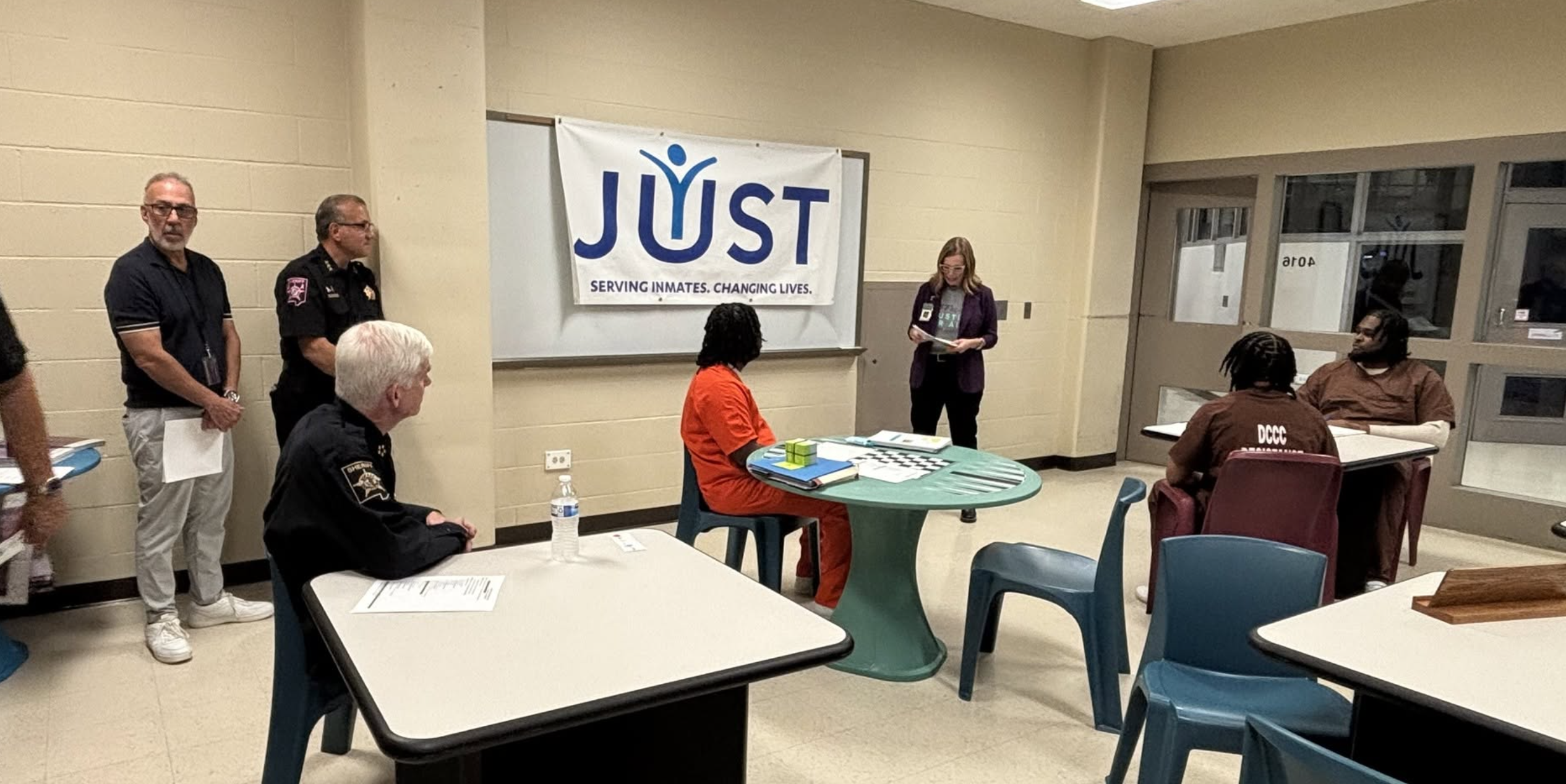
At our recent graduation, guests had the chance to watch these men step up and lead a full Slant System lesson demonstration. Seeing them shine, lead, and rewrite their own narratives served as a powerful reminder of a simple truth: Literacy saves lives.
Whether as a teacher or a learner, the impact made inside these walls will echo far into the future, not just within the facility, but back out in the community when these individuals rejoin society. I am beyond honored to be a part of their journey.