Back to School: What I Look for First When I Walk Into a School
Back to School: What I Look for First When I Walk Into a School
By Beth Hatlen
As a veteran educator of over 22 years, there is something about the beginning of a school year that never gets old.
The freshly waxed floors. Bulletin boards waiting to tell new stories. Teachers putting the finishing touches on classrooms they’ve spent hours preparing. And that mix of excitement and nervous energy that reminds us every August why this work matters so much.
For principals, though, back-to-school season can feel like drinking from a fire hose. Transportation. Staffing. Parent emails. Last-minute schedule changes. Building culture. Safety drills. The list never seems to end.
With so many demands competing for your attention, it’s easy for instructional leadership to get pushed to the back burner.
But here’s what I’ve learned after years of working alongside school leaders: the first few weeks of school tell us almost everything we need to know about how the rest of the year will unfold.
Not because every lesson is perfect. It won’t be.
But because patterns begin to emerge.
That’s why I encourage school administrators to spend less time asking, “Is everyone following the program?” and more time asking, “What are my students actually experiencing when they walk into a literacy block?”
Look for Consistency, Not Perfection
One of the simplest ways to answer that question is to visit classrooms with a clear purpose.
If you step into three classrooms in the same grade level, do you see students engaged in meaningful literacy learning? Are teachers using the instructional routines your school has committed to? Do students know what they’re learning and why?
Consistency doesn’t mean every classroom looks identical.
It means every child has access to high-quality literacy instruction, regardless of which classroom they’re in.
When we find inconsistencies early, we have the opportunity to coach, support, and strengthen practice before those gaps become achievement gaps.
Notice the Teachers, Too
School isn’t just about the students, I always encourage leaders to pay just as much attention to their teachers.
- Do they seem confident using the curriculum?
- Do they know what to do when a student isn’t making progress?
- Can they explain why they’re using a particular intervention or instructional routine?
Sometimes what appears to be an instructional issue is really a support issue.
Teachers don’t need another initiative. They need clarity, coaching, and the confidence that they’re doing the right work for the students sitting in front of them.
Families Are Watching, Too
Parents may not know the language of structured literacy or intervention science, but they know when their child is struggling.
They want to understand what’s happening and what the school is doing about it.
- Can your teachers explain why a student is receiving a particular intervention?
- Can they share evidence of growth in language families understand?
Those conversations build trust long before report cards are sent home.
Use Walkthroughs to Start Conversations
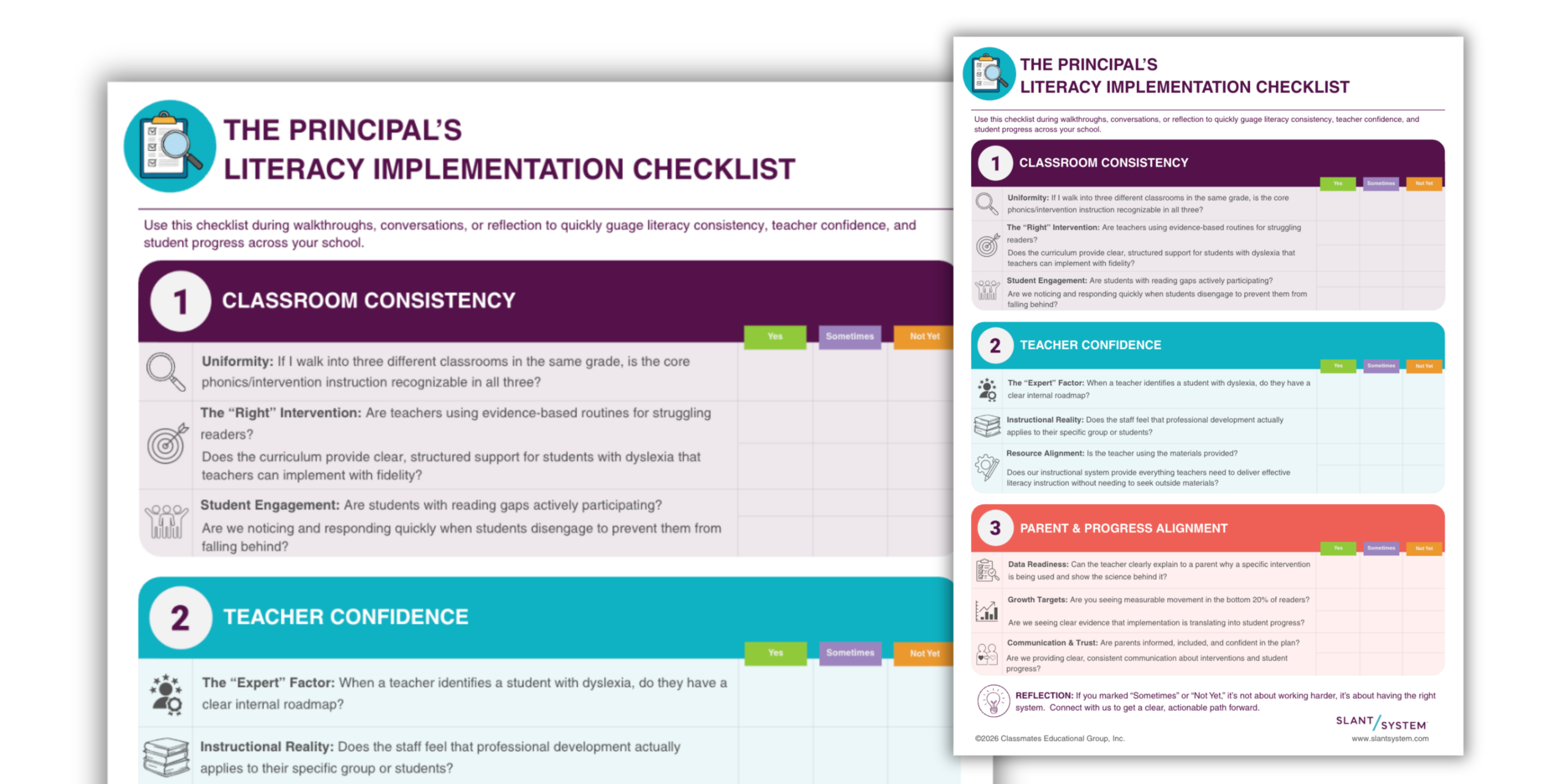
One of my favorite tools for principals is a simple literacy implementation checklist – not because it’s another thing to complete, but because it changes the conversations we have.
Instead of checking boxes, we’re looking for patterns.
- What’s happening consistently across classrooms?
- Where are teachers thriving?
- Where do they need additional support?
Those observations become the roadmap for coaching, professional learning, and leadership decisions throughout the year.
Download your literacy implementation checklists here, and feel free to share these checklists and our other free resources with your staff!

Before You Leave Your Next Classroom…
As you head into classrooms this fall, I hope you’ll resist the urge to look for everything.
Instead, focus on a few high-impact indicators.
- Are students engaged?
- Are teachers implementing strong literacy practices with confidence?
- Do struggling readers have access to the support they need?
Those simple observations often tell you far more than another spreadsheet ever will.
The beginning of the school year isn’t about catching teachers doing something wrong. It’s about creating the conditions where great teaching can flourish.
Because when teachers feel supported, literacy instruction becomes stronger.
And when literacy instruction becomes stronger, students thrive.
That’s the kind of school year every school administrator hopes to build.