Understanding Dyslexia & How To Make a Difference
October marks Dyslexia Awareness Month, a time to shine a light on the 1 in 5 children who experience this language-based learning difference. Despite how common dyslexia is, too many students go undiagnosed, misunderstood, or left without the support they need. The consequences are real: frustration in the classroom, declining self-esteem, and a growing gap between a child’s potential and their performance.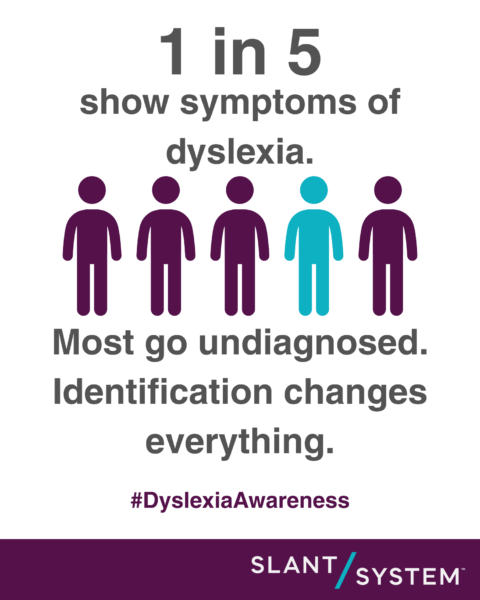
But with identification and the right instruction, everything can change.
Outside the classroom, Henry seemed like a bright, energetic third grader with boundless curiosity. But inside the classroom, reading was a daily nightmare. His struggles started early. In kindergarten, he had difficulty learning the alphabet and struggled with phonemic awareness. He couldn’t reliably hear or manipulate the sounds in words.
By first grade, it became more apparent that reading was a persistent challenge. Teachers noted that he struggled to remember his “sight words” and could not sound out simple words. Early attempts at reading tasks were frustrating and slow. It was at this time that Henry had been placed in a reading intervention group. He was being taught using leveled books filled with pictures, relying on contextual cues. He appeared to be reading, but in reality, he was guessing words correctly rather than decoding them. His intelligence and language comprehension masked his dyslexia, but the underlying issue remained.
By third grade, Henry had lost his spark for learning and school. His challenges were interpreted differently. Teachers labeled him inattentive, and sometimes even disruptive. Whenever it was time for reading, he’d suddenly need to go to the bathroom, and often be gone for a long time. He would get physically ill when tasks felt too hard, avoided work whenever possible, and at home, reading and writing led to tears, arguments, and frustration. Despite initially excelling in math, Henry’s reading challenges soon spilled over into areas that had been his strengths. Word problems and even math tasks became a source of frustration, and writing tasks were nearly impossible.
Years spent receiving ineffective reading instruction created more frustration over time. As Henry advanced in grade levels, the gap between his reading abilities and those of his peers widened. He recognized that he could not do what the other kids could, leading to a decline in self-esteem and increased anxiety around reading tasks.
Henry’s story is a familiar one, maybe one of a student in your classroom or even your own child at home.
Then everything changed. When he was in 5th grade, a teacher with specialized training recognized that Henry’s struggles weren’t a reflection of his effort or intelligence but a sign that he needed a different approach. With explicit, systematic instruction in phonics and phonemic awareness, delivered patiently and consistently, Henry began to rewire the way his brain processed language. Slowly, he started unlocking words, one at a time. As reading became more accessible, his frustration faded, his confidence grew, and for the first time he could truly engage with learning. Henry rediscovered his curiosity about the world, and school transformed from a place of struggle into a place of possibility. He went on to graduate high school with honors and earn a degree in business, proof that dyslexia does not define a child’s future. What makes the difference is access to the right instruction at the right time.
Common Myths About Dyslexia
-
Myth #1: Dyslexia means you see letters backward.
Truth: Dyslexia is a language-based learning difference, not a vision problem. Letter reversals may happen, but they are not the defining feature. -
Myth #2: Dyslexia only affects those with lower intelligence.
Truth: Dyslexia impacts decoding and spelling, not intelligence. Henry’s story shows that strong comprehension and reasoning can mask reading difficulties. -
Myth #3: Dyslexia only affects children.
Truth: Dyslexia is lifelong, though effective intervention can dramatically improve reading outcomes. - Myth #4: Dyslexia is rare.
Truth: Dyslexia is quite common; estimates suggest 15–20% of the population may show symptoms of dyslexia, but most go undiagnosed and without support.
Recognizing the Signs and Symptoms
Early recognition is critical. Signs can appear in preschool and persist through adulthood:
Early Years (Preschool–Kindergarten):
-
Difficulty learning letters, both names and sounds; and identifying if words rhyme or producing rhyming words
-
Challenges with hearing and manipulating the individual sounds in words, for example, “What sound do you hear at the beginning of the word ‘ball’?”
-
Trouble remembering sequences (days, alphabet)
Elementary School and Beyond:
-
Slow or inaccurate decoding
-
Guessing words based upon the first few letters, instead of sounding them out
-
Avoidance behaviors around reading
-
Spelling difficulties
-
Poor reading fluency
-
Challenges with writing tasks
Taking Action: Identification and Support
-
Screen Early and Often
Early literacy screenings can detect dyslexia before frustration turns into avoidance. -
Use Evidence-Based Instruction
Structured literacy programs teach decoding and encoding skills systematically, giving students like Henry the tools to unlock words. -
Provide Multimodal Learning Opportunities
Engaging visual, auditory, and tactile-kinesthetic pathways helps children retain sound-letter connections – seeing, hearing, saying, and doing. -
Accommodate and Empower
Support includes 1:1 or small group instruction, scribing, audiobooks, and scaffolding. -
Partner with Skilled Teachers
Teachers trained and certified in structured literacy can transform a student’s learning experience, building both skills and confidence. Henry’s turnaround highlights the difference that the right training and skill set makes in unlocking potential and ultimately changing the trajectory of a child’s future.
The Cost of Delay
- Approximately 80% of students with learning disabilities have word level (decoding-based) reading disabilities. This is dyslexia.
- Dyslexia is the most commonly identified form of learning disability (even if it is not termed “dyslexia”). It is usually identified as a specific learning disability in basic reading.
- 40-60% of children with an older sibling or parent with dyslexia will inherit dyslexia themselves.
- 85% of juveniles appearing in court are illiterate or semi-literate.
- Students who don’t read proficiently by the 3rd grade are 4x more likely to drop out of school.
- Two-thirds of students who cannot read proficiently by the end of 4th grade will end up in jail or on welfare.
- Thirty-two million adults in the United States can’t read above a 5th grade level, and 19% of high school graduates cannot read.
- 46% of American adults cannot understand the labels on their prescriptions.
Delaying appropriate support hinders academic progress and increases the likelihood of long-term reading difficulties. Early identification and intervention are key to preventing these gaps from widening.
Source: The International Dyslexia Association and https://literacyinc.com/about-us/
Unlocking Potential
Henry’s story shows the power of proper recognition and intervention. When dyslexia is understood and addressed by a teacher with the right training, behaviors that were once seen as inattentive or oppositional can disappear. Self-esteem rises, academic access improves, and children can thrive.
Dyslexia doesn’t define a child’s intelligence or creativity. It defines a different way of learning. With patience, evidence-based instruction, and skilled support, students can overcome challenges, realize their potential, and open the door to lifelong learning.
What we know –> Dyslexia is common, treatable, and often misunderstood. Recognizing the signs early and providing structured, targeted support, delivered by trained, knowledgeable educators, can change a child’s life, just like it did for Henry.
Henry’s success was possible because a teacher had the right knowledge and tools. Every student with dyslexia deserves the same chance. The Slant System™ equips educators and students with comprehensive evidence-based methods grounded in the science of reading with explicit, systematic instruction that makes literacy accessible for all learners.
If you’re an educator, specialist, or administrator, now is the time to invest in training that transforms lives.
Learn more about Slant System™certification.