The Breakthrough: How Structured Literacy Transformed Student Outcomes in Belvidere, IL
The Breakthrough: How Structured Literacy Transformed Student Outcomes in Belvidere, IL
By Beth Hatlen, in collaboration with Michele Jacobs
Over the past three years, Slant System™ has partnered with Belvidere Community Unit School District 100, located just 70 miles west of Chicago, to implement a structured literacy approach grounded in the Orton-Gillingham method. This collaboration has focused on improving literacy outcomes for students, particularly struggling readers and those with dyslexia, through explicit, systematic instruction.
By May of this year, a third cohort of educators will earn their Structured Literacy and Dyslexia Specialist certification, bringing the total number of certified special education teachers in the district to more than 30. This growing investment in evidence-based reading instruction is helping to transform how literacy is taught, and how students experience learning to read.
The Turning Point: Data That Changed Everything
This summer, Ms. Michele Jacobs joined the district’s leadership team as a special education supervisor. In her role, she not only supported teachers through their training, but also closely monitored student progress using data-driven literacy assessments.
At the middle of the school year, Ms. Jacobs began analyzing student growth across key foundational literacy skills, including phonemic awareness, phonics, spelling, and grade-level oral reading fluency.
What she found was remarkable.
“The numbers didn’t just move, they leapt,” Ms. Jacobs shared. “The results were outstanding. Students achieved an overall growth percentage of 97%, nearly doubling their literacy skills in phonemic awareness, phonics, and spelling.”
These results highlight the power of structured literacy instruction when implemented with fidelity. By focusing on the underlying skills required for reading success, the district saw measurable gains that exceeded expectations.
97% Literacy Growth: What the Data Reveals
The success in Belvidere District 100 is not just a promising trend, it is a clear example how well-trained teachers combined with evidence-based reading instruction can close literacy gaps.
Through the Slant System’s structured literacy framework, students received:
- Explicit phonics instruction
- Systematic phonemic awareness development
- Targeted spelling and encoding practice
- Consistent opportunities to build reading fluency
This comprehensive approach ensures that students are not left to guess or memorize, but instead develop a reliable process for decoding and understanding words.
For students with dyslexia and other reading difficulties, this type of instruction is critical. It replaces confusion with clarity and provides a pathway to sustained literacy growth.
Beyond the Data: A Shift in Student Confidence
While the quantitative results are impressive, the transformation in student mindset may be even more significant.
“Beyond the impressive quantitative gains, the most profound impact has been the shift in student mindset,” Ms. Jacobs explained. “Teachers across the district consistently report a significantly higher level of self-confidence among students who previously viewed themselves as ‘non-readers.’”
With access to a predictable and repeatable toolkit for decoding words, students began to approach reading with a sense of control rather than anxiety.
“The anxiety associated with reading has been replaced by a sense of agency,” Ms. Jacobs noted.
This shift, from avoidance to engagement, is a key indicator of long-term success. When students believe they can learn to read, they are far more likely to persist and grow.
From Symptom Management to Root-Cause Instruction
Reflecting on the broader impact of the Slant System, Ms. Jacobs described a fundamental shift in how she views literacy instruction.
“Using the Slant System this year has moved my approach from ‘symptom management’ to true root-cause resolution,” she shared. “I no longer see literacy as a broad, nebulous challenge. Instead, I view it through a structured, diagnostic lens.”
This perspective is at the heart of structured literacy. When students struggle, the issue is not a lack of effort, it is often a lack of access to explicit, systematic instruction.
“The system has reinforced that when students struggle, it is rarely due to motivation,” Ms. Jacobs added. “It is because they have not yet been given a predictable, repeatable process for success.”
A Model for Literacy Success in Schools
The work happening in Belvidere District 100 serves as a powerful case study for schools seeking effective dyslexia intervention and literacy improvement strategies.
By investing in teacher training, implementing structured literacy practices, and using data to guide instruction, the district has created a sustainable model for improving reading outcomes.
This success demonstrates that with the right approach, schools can:
- Close literacy gaps
- Improve phonics and phonemic awareness skills
- Increase reading fluency and spelling accuracy
- Build confidence in struggling readers
Acknowledging the Educators Behind the Impact
This transformation would not be possible without the dedication of educators and leaders committed to improving literacy outcomes.
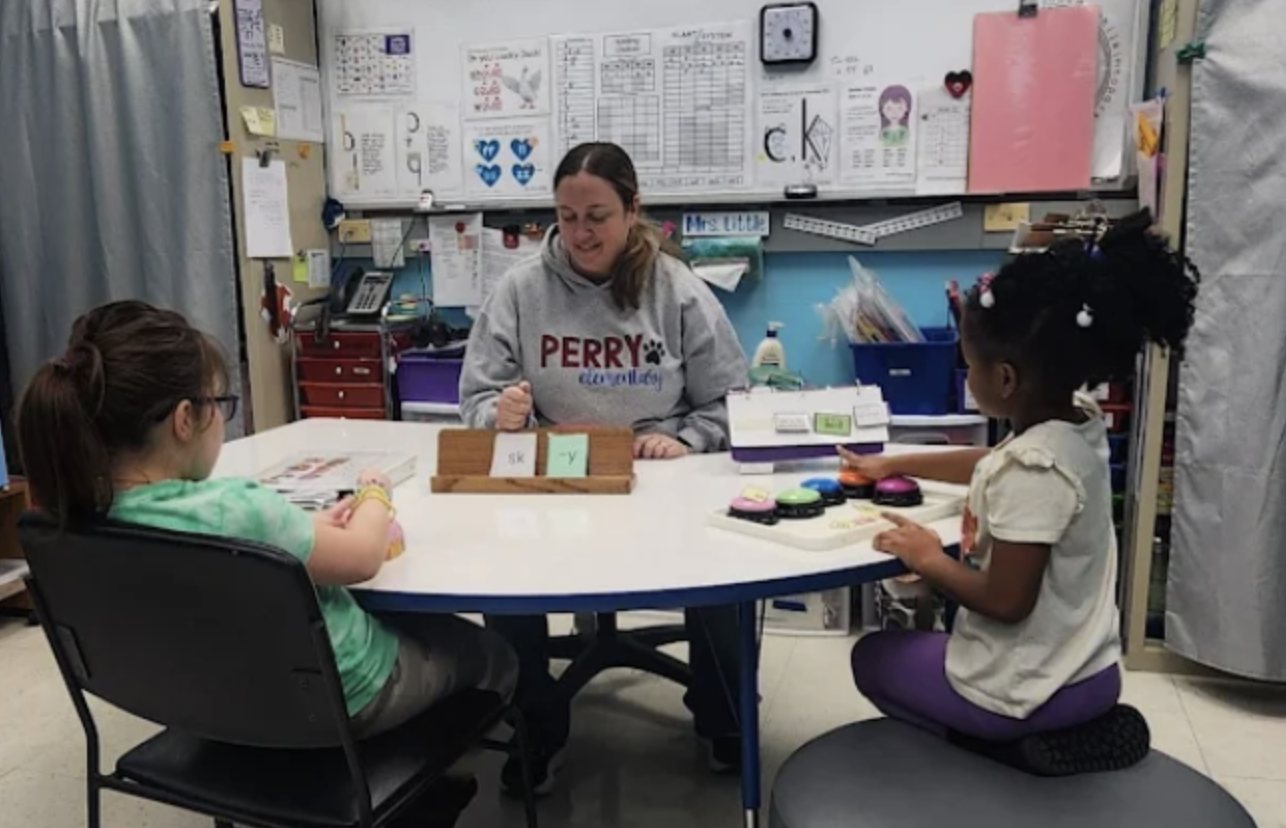
Thank you to Ms. Jacobs and teachers like Ms. Jennifer Little (pictured below) and many others that pour their time and energy into improving literacy outcomes for the students in Belvidere, IL.
Their work is not only changing test scores, it is changing lives.
Final Note
If you are looking for structured literacy that delivers measurable results for students with dyslexia and other reading challenges, the success in Belvidere District 100 offers a compelling example of what is possible with the right training and approach.