Orton-Gillingham: The True OG of The Science of Reading
by Karla O’Brien
The Science of Reading and Orton-Gillingham
The Science of Reading is not a program, but a body of research that explores how humans learn to read and the most effective methods for teaching reading. It draws from various disciplines, including cognitive psychology, neuroscience, linguistics, and education. The goal is to understand the processes involved in reading and to use this knowledge to inform best practices in reading instruction. In 2000, The NRP (National Reading Panel, 2000) identified the “Big 5” – phonemic awareness, phonics, fluency, vocabulary, and comprehension— as essential components for effective reading instruction.
The science of reading emphasizes structured literacy instruction, which is explicit, systematic, and sequential, often focusing on phonics and other foundational skills to develop skilled readers that can interact with and make sense out of text. It also supports the idea that reading is a complex, cognitive process that requires different skills to be developed in tandem.
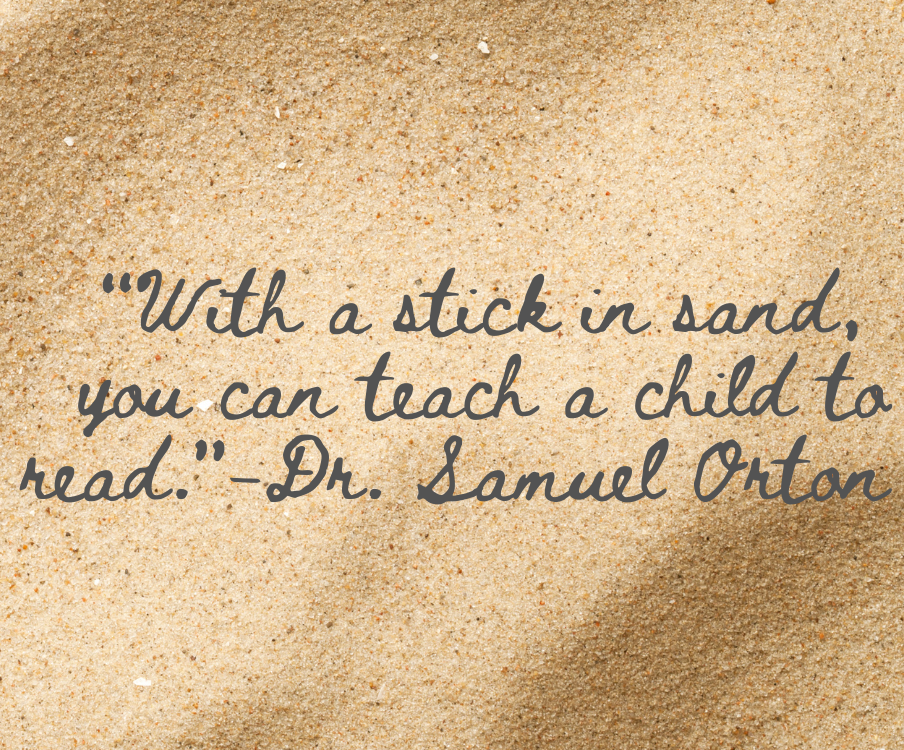
Orton-Gillingham, developed in the early 20th century by Dr. Samuel Orton and educator Anna Gillingham, was the first structured literacy approach based on these scientific principles.
Orton-Gillingham is rooted in explicit and systematic phonics instruction, a practice endorsed by Linnea Ehri’s research on orthographic mapping. Ehri (2005) explains, “Systematic phonics instruction helps students form connections between graphemes and phonemes, allowing them to store words in memory for automatic retrieval.” This concept aligns directly with OG’s methodical approach to teaching phoneme-grapheme correspondences.
The Slant System: A Practical OG Approach that Elevates Literacy for All
One powerful application of the Orton-Gillingham approach is the Slant System™, a structured, cumulative, and multimodal framework that ensures mastery at every step of literacy instruction. Designed with fidelity to OG principles, the Slant System integrates the Science of Reading’s emphasis on explicit instruction and builds it into a clear path for all learners—whether they are developing typically or experiencing difficulties.
The Slant System™ emphasizes intentional lesson planning, scaffolded instruction, and the incorporation of visual, auditory, and kinesthetic modalities. This multimodal engagement strengthens neural pathways by reinforcing phonological awareness, phonics, and orthographic mapping in every lesson. The cumulative structure ensures that each new concept builds on previously mastered skills, echoing the Science of Reading’s emphasis on sequencing and automaticity.
But perhaps the Slant System’s greatest strength lies in its flexibility—it supports differentiation without compromising structure. Teachers can use it to reach a broad range of learners, from emergent readers to those with dyslexia, ensuring all students receive the high-quality, evidence-based instruction they deserve.
By providing a clear routine, integrating visual cues, and anchoring instruction in repetition and review, the Slant System™ helps learners internalize reading concepts in a way that sticks. It turns abstract concepts into tangible steps, which is especially crucial for students who need more than just exposure—they need intentional practice.
 Interested in seeing what is included in a Slant System™ lesson? Download our Quick Reference Lesson Guide here.
Research Supporting Orton-Gillingham’s Effectiveness
Dr. Joseph Torgesen’s research further validates OG’s emphasis on intensive, structured literacy instruction. Torgesen (2004) noted that struggling readers require “explicit instruction in phonemic awareness and phonics at a level that is more systematic, comprehensive, and intensive than typically provided.” This aligns with OG’s multimodal, sequential methodology that ensures a level of mastery before progression.
Similarly, Dr. Sally Shaywitz, a renowned neuroscientist specializing in dyslexia, has extensively documented the importance of structured literacy instruction. In her book Overcoming Dyslexia, Shaywitz (2020) highlights the necessity of systematic, multimodal instruction for dyslexic learners, stating, “The best programs for struggling readers are those that teach phonemic awareness, phonics, and fluency in an explicit and structured manner.” The Orton-Gillingham approach was one of the first to incorporate these principles, making it a foundational model for effective reading instruction.
The Lasting Impact of Orton-Gillingham
While many programs today claim to align with the Science of Reading, OG was ahead of its time, embodying the very principles that research now confirms as essential. Its explicit, systematic, multimodal approach is not only effective for dyslexic learners but benefits all students learning to read.
The Slant System™ stands as a shining example of how OG can be applied practically in modern classrooms to meet today’s demands. As we continue to advocate for Science of Reading-aligned instruction, it is essential to recognize the pioneering work of Dr. Samuel Orton and Anna Gillingham. The movement toward evidence-based reading instruction owes much to their groundbreaking methods, which remain just as relevant today as they were a century ago. Without the OG approach—and modern systems like Slant—many individuals with dyslexia or reading difficulties might not receive the targeted, evidence-based instruction they need to become proficient readers. As a result, Orton and Gillingham’s work has indeed transformed countless lives.
References
- Ehri, L. C. (2005). Development of sight word reading: Phases and findings. In M. J. Snowling & C. Hulme (Eds.), The science of reading: A handbook (pp. 135-154). Blackwell.
- National Reading Panel. (2000). Teaching children to read: An evidence-based assessment of the scientific research literature on reading and its implications for reading instruction. National Institute of Child Health and Human Development.
- Shaywitz, S. E. (2020). Overcoming dyslexia: Second edition. Knopf.
- Torgesen, J. K. (2004). Lessons learned from research on interventions for students who have difficulty learning to read. In P. McCardle & V. Chhabra (Eds.), The voice of evidence in reading research (pp. 355–382). Paul H. Brookes Publishing Co.