OG: The Icing on the Cake!
By Beth Hatlen
Over 40 years of brain research on how humans learn to read have proven that structured literacy is the most effective method for teaching reading. When paired with the Orton-Gillingham (OG) approach, this combination benefits all students and is especially critical for those with dyslexia.
As a kindergarten teacher and Reading Specialist, active learning was the nature of my teaching. When I learned that what I did naturally was actually a proven method of positive learning outcomes, I felt validated. It was through my own structured literacy OG certification that my early efforts were celebrated knowing that I was teaching in an active and engaging fashion. As a reading specialist, working with struggling readers and those with dyslexia (diagnosed and not yet diagnosed), the gains all of my students made using an OG structured literacy method were truly phenomenal!
What Is Structured Literacy?
Structured literacy is an evidence-based reading method that systematically teaches the building blocks of reading—phonemic awareness, phonics, vocabulary, comprehension, fluency, and more. Unlike less explicit methods (guided reading, balanced literacy, whole language), structured literacy guides students step-by-step through these foundational skills, providing opportunities to practice learned skills to build the right brain pathways that create skilled and confident readers. This is essential for all students and non-negotiable for students with dyslexia who require the most direct and sequential approach to master reading skills.
Click here to learn how to incorporate structured literacy methods into your classroom.

The Orton-Gillingham Method
The Orton-Gillingham structured literacy approach emphasizes explicit, systematic, diagnostic and prescriptive instructional practices, COMBINED with multimodal instruction that simultaneously engages students through visual, auditory, and tactile-kinesthetic pathways. Often recognized in advanced literacy courses and dyslexia specialist certifications, OG is diagnostic AND prescriptive, allowing instruction to be uniquely tailored based on each student’s progress. Though the OG method is structured literacy, not all structured literacy approaches are OG. Structured literacy, enhanced with multimodal instruction and tailored to students’ needs, makes OG the perfect finishing touch to an already proven system—truly the icing on the cake!
The Controversy
There is no denying there is a lack of empirical evidence to support “multisensory” instruction. This terminology has inadvertently created the notion that instruction must utilize bumpy textures or sand. While this may increase engagement and make the process fun, isolating the effect of these activities has not been studied. Due to this confusion, the term “multisensory” has been replaced with “multimodal”. What matters is the activation of visual, auditory, and tactile-kinesthetic modalities simultaneously – seeing the letters, saying and hearing the sounds, and the movement of writing the letters.
A recent Reading League Journal article reviews the parts of Orton-Gillingam that are supported by research including, “direct and explicit instruction with scaffolding, structured and sequential instruction, and diagnostic and prescriptive instruction.” Additionally, at the Reading League Conference 2024, during a presentation given by Elizabeth Stevens and Christy Austin titled “Unpacking the Meta-Analysis of Orton-Gillingham,” the presenters helped the audience to understand the findings of the Orton-Gillingham meta-analysis by Sharon Vaughn, et. al. Stevens and Austin stated, “We just don’t have enough trustworthy studies to prove or disprove OG’s effectiveness.” One of the reasons for this being the short duration of the studies was not enough for students to show growth, when students with dyslexia may require much more time and more exposures and repetition. Another reason is, dyslexia is a spectrum ranging from mild to severe, and instruction from one student to another may vary based upon the diagnostic individualization of the lessons. Additionally, there is some disagreement on what multisensory/multimodal truly means, and how do we not simulateneously activate multiple senses when reading? There is no doubt that brain imaging has proven we can change brain pathways with this approach.
In an article published in The Reading League Journal, Christy Austin, Liz Stevens, Alisha Demchack, and Emily Solari emphasize: “We must remember that the absence of evidence is not the same as evidence of absence. In other words, a practice might be effective for students, but there is a lack of research to definitively know one way or another. Until we know if a specific practice works, we should remain open to adjusting instructional practices to align with current research and rely on those practices rooted in evidence.”
Similarly, Dr. Holly Lane, author of the University of Florida Literacy Institute: Foundations Manual, notes that “effective interventions can be multisensory” (p. 12). She also highlights that Orton-Gillingham interventions, a type of multisensory instruction, are explicit, systematic, and intensive—qualities synonymous with structured literacy.
From my perspective, integrating a multimodal approach into structured literacy instruction requires no additional time and can enhance the learning experience. Until research suggests otherwise, I plan to continue incorporating these strategies in my teaching because I have seen, first hand, how multimodal activities can positively benefit a child on their literacy journey.
Why This Combination Works
The well respected and well researched, International Dyslexia Association, supports “hands-on, engaging, multimodal instruction.” In an article titled Structured literacy: Effective instruction for students with dyslexia and related reading difficulties, the authors state that: “Listening, speaking, reading, and writing are often paired with one another to foster multimodal language learning.” Structured literacy and OG reinforce each other, creating an impactful literacy instruction system. Structured literacy provides the systematic, evidence-based approach, while OG provides all of that plus emphasis on simultaneous activation of multiple modalities. Educators equipped with OG certification or specialized literacy training for teachers are better prepared to meet the needs of all learners. 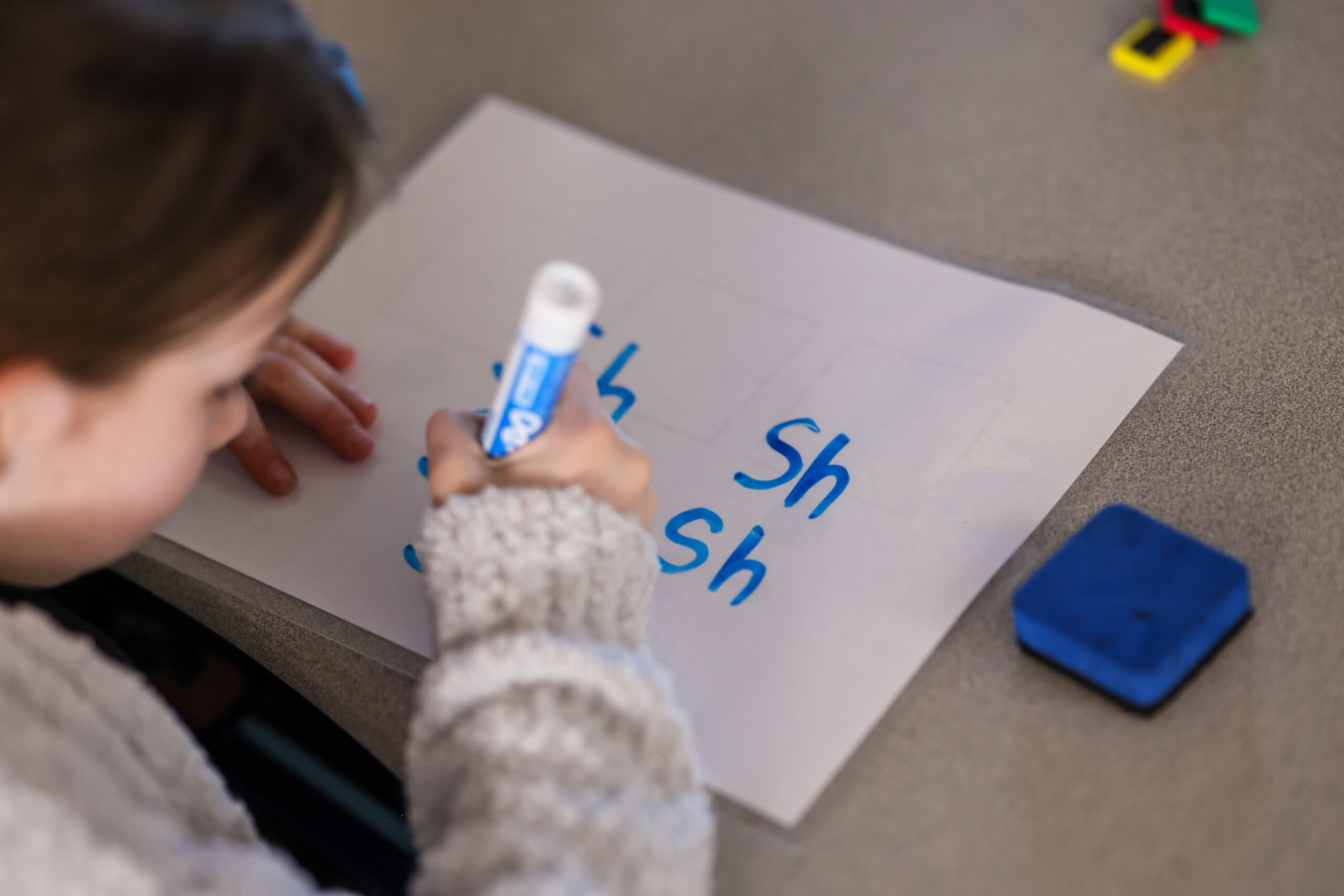
Lasting Impact on Student Success
Classrooms that implement this dual approach see measurable growth in students’ reading abilities, particularly those with dyslexia or other reading challenges. With the right training and coaching, teachers can deliver these methods effectively, setting students on a path to literacy confidence and academic achievement. Integrating structured literacy and the OG method equips students for success by providing a systematic, inclusive pathway to reading mastery—laying the foundation for lifelong learning.
“Boots on the Ground” Reflection
When I think about the incredible work of Dr. Anita Archer, one of her most inspiring “Archerisms” comes to mind: “Learning is not a spectator sport.” This resonates deeply with the principles of the OG approach, which emphasizes active engagement and participation in learning. Reflecting on my years of teaching kindergarten, I recognize how essential it was to weave active participation and multimodal experiences into every aspect of my instruction.
All great teachers understand that active learning is the foundation of student success, and this is especially true for literacy lessons. The OG method embraces this philosophy, and I’ve yet to meet a practitioner who doesn’t believe that multimodal learning benefits all students, especially those with dyslexia. Let’s continue to make active learning and multimodal experiences a cornerstone of our teaching, inspiring students to fully engage in their literacy journey. After all, what is cake without the icing?
Austin, C., Stevens, L., Demchak, A., & Solari, E. (2023). Orton-Gillingham: Which aspects are supported by research and which require additional research? The Reading League Journal.
International Dyslexia Association. (2020). Structured literacy: Effective instruction for students with dyslexia and related reading difficulties. Retrieved November 15, 2024, from https://dyslexiaida.org/structured-literacy-effective-instruction-for-students-with-dyslexia-and-related-reading-difficulties/
Stevens, E. A., Austin, C., Moore, C., Scammacca, N., Boucher, A. N., & Vaughn, S. (2021). Current State of the Evidence: Examining the Effects of Orton-Gillingham Reading Interventions for Students With or at Risk for Word-Level Reading Disabilities. Exceptional Children, 87(4), 397-417. https://doi.org/10.1177/0014402921993406
Solari, E., Petscher, Y., & Hall, C. (2021). What does science say about Orton-Gillingham interventions? An explanation and commentary on the Stevens et al. (2021) meta-analysis. The Reading League Journal. Retrieved from https://www.thereadingleague.org/wp-content/uploads/2021/05/Article-for-May-2021-TRLJ.pdf