From A to Z: How Alphabet Arcs Boost Early Literacy
From A to Z: How Alphabet Arcs Boost Early Literacy
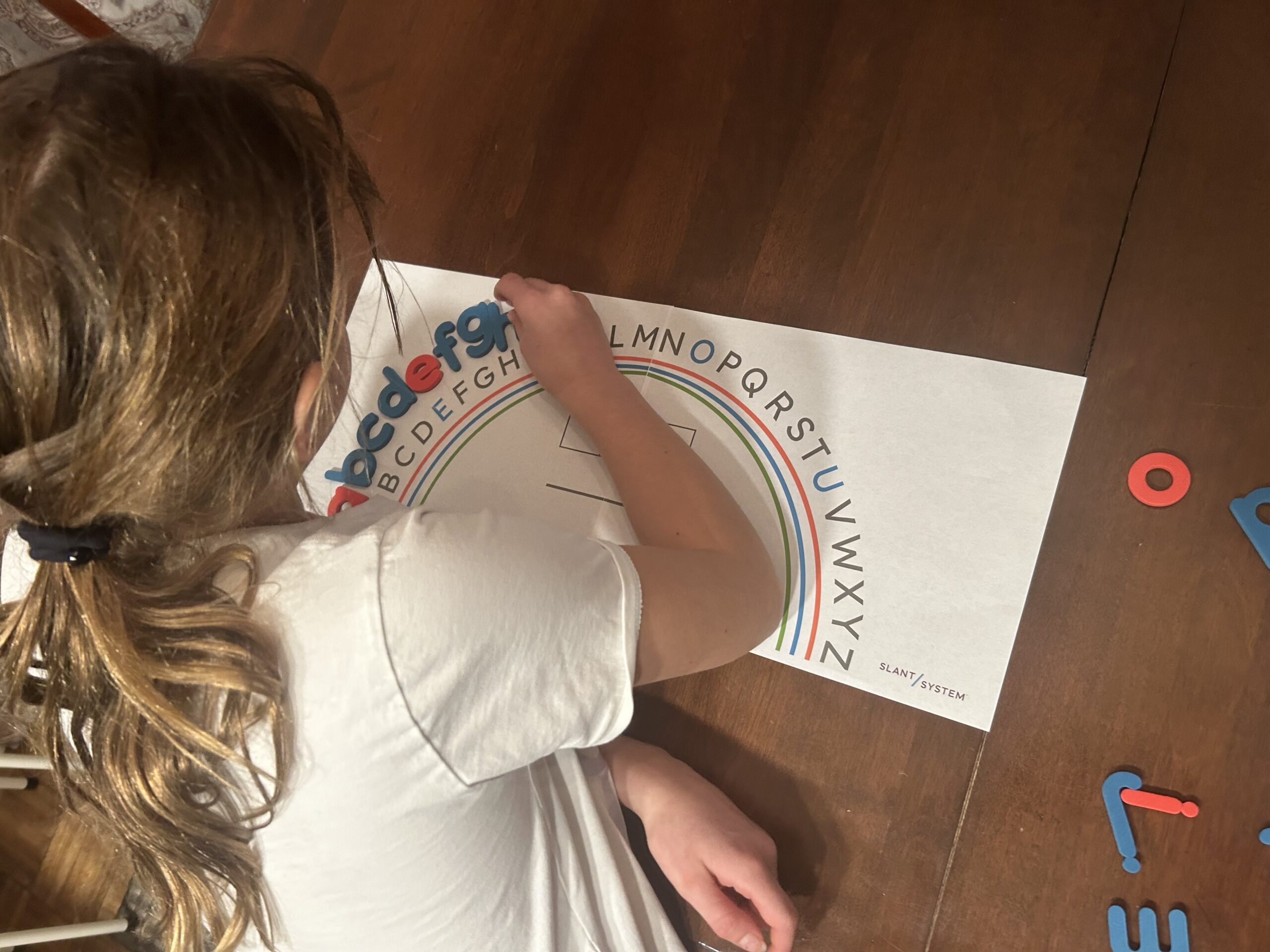
An alphabet arc is a visual representation of the alphabet in an arc shape, typically featuring uppercase and lowercase letters. Some versions are segmented into beginning, middle, and end sections to help children recognize letter placement within the alphabet sequence. Educators and parents use alphabet arcs to engage children in hands-on letter learning activities, promoting both letter fluency and cognitive connections between letters and sounds.
The Research Behind Alphabet Arcs
Knowledge of letter names and phonemic awareness are among the strongest indicators of later reading achievement. Alphabet arcs specifically help reinforce these skills by providing a structured yet interactive way for children to engage with letters, fostering familiarity with their order and relationships (National Early Literacy Panel, 2008).
Furthermore, multimodal learning—such as manipulating letters in an alphabet arc—has been shown to enhance memory retention and learning efficiency. According to research from the International Dyslexia Association, hands-on and kinesthetic activities support early readers, particularly those who struggle with traditional phonics instruction (International Dyslexia Association, 2017). Additionally, research by Ehri (2005) on orthographic mapping emphasizes that interactive methods like alphabet arcs help children internalize letter sequences more effectively.
Why an arc? An alphabet arc is shaped in an arc rather than a straight line for several key reasons:
- The curved shape helps children visualize the beginning, middle, and end of the alphabet more clearly and mimics natural letter progression. This structure aids in understanding letter placement and sequencing.
- The arc encourages learners to recognize letter positions in a way that supports reading and spelling. It helps them grasp concepts like alphabetical order and grouping of letters in a more intuitive layout.
- By physically placing letters on an arc, children engage in a hands-on, kinesthetic learning experience. This movement-based approach strengthens memory retention and supports early literacy development.
- Since reading and writing occur from left to right, the arc naturally guides children in this direction, reinforcing proper letter tracking and orientation.
- Many alphabet arc activities involve matching uppercase and lowercase letters. The arc structure helps organize these pairs in a way that is easy to follow and recall.
How to Get Started with Alphabet Arcs
Creating an alphabet arc is simple and requires minimal materials. Here’s how you can set one up:
- Print or Draw an Arc: Print a template (here) or draw an arc on a large sheet of paper, marking spaces for each letter.
- Use Letter Tiles or Cards: Provide children with moveable letters (magnetic letters, wooden blocks, or printed letter cutouts) to place on the arc.
- Start with Familiarization: Have children match letters 1:1 to their corresponding spaces on the arc.
- Incorporate Phonemic Awareness: Encourage kids to say the letter names and sounds as they place them.
- Progress to Word Building: Use the arc to form simple words and blend sounds together.
Activities to Try with an Alphabet Arc
Here are some engaging activities to maximize the effectiveness of an alphabet arc in early literacy instruction:
1. Letter Matching: Strengthen letter recognition by matching uppercase and lowercase letters.
- Provide a set of uppercase and lowercase letter tiles. Have children place each lowercase letter in the correct spot on the arc where the uppercase counterpart is already placed.
2. Missing Letter Challenge: Improve letter sequencing and recall.
- Remove a few letters from the arc and ask children to determine which ones are missing. For an added challenge, give clues about the missing letters’ sounds.
3. Letter Sound Hunt: Reinforce phonemic awareness.
- Call out a letter sound, and have children find and place the corresponding letter in the arc. This helps with sound-symbol association.
4. Speed Arc Challenge: Build fluency in letter placement and recognition.
- Time children as they place all the letters on the arc in the correct order. Encourage them to improve their time with each attempt.
5. Beginning Sound Sort: Strengthen the connection between letters and initial sounds.
- Provide a set of picture cards (e.g., apple, ball, cat) and have children place them next to the corresponding letter on the arc.
6. Alphabet Song Reinforcement: Support letter order retention through music.
- Have children point to each letter on the arc while singing the alphabet song. This helps connect verbal and visual learning.
7. Word Building with the Arc: Introduce early spelling and blending skills.
- Once children are comfortable with the alphabet arc, encourage them to use letters from the arc to build simple CVC (consonant-vowel-consonant) words like “cat” or “dog.”
8. Letter Writing: Multimodal learning
- Have students trace or write the letters while saying the letter name or sound for each letter.
Download your FREE alphabet arc!
Final Thoughts
Alphabet arcs are a valuable addition to any early literacy curriculum, providing an engaging and research-backed method for helping children develop essential reading and writing skills. By incorporating alphabet arcs into learning routines, educators and parents can support young learners in building a strong foundation for literacy success. Whether at home or in the classroom, alphabet arcs are a simple yet impactful way to make letter learning both fun and effective.
Cited Research
- Ehri, L. C. (2005). Learning to Read Words: Theory, Findings, and Issues. Scientific Studies of Reading, 9(2), 167-188.
- International Dyslexia Association. (2017). Effective Reading Instruction for Students with Dyslexia.
- National Early Literacy Panel. (2008). Developing Early Literacy: Report of the National Early Literacy Panel.National Institute for Literacy.
- Piasta, S. B., & Wagner, R. K. (2010). Developing Early Literacy: Predictors and Outcomes of Preschool Children’s Letter Knowledge. Journal of Experimental Child Psychology, 105(4), 324-344.